
Introduction
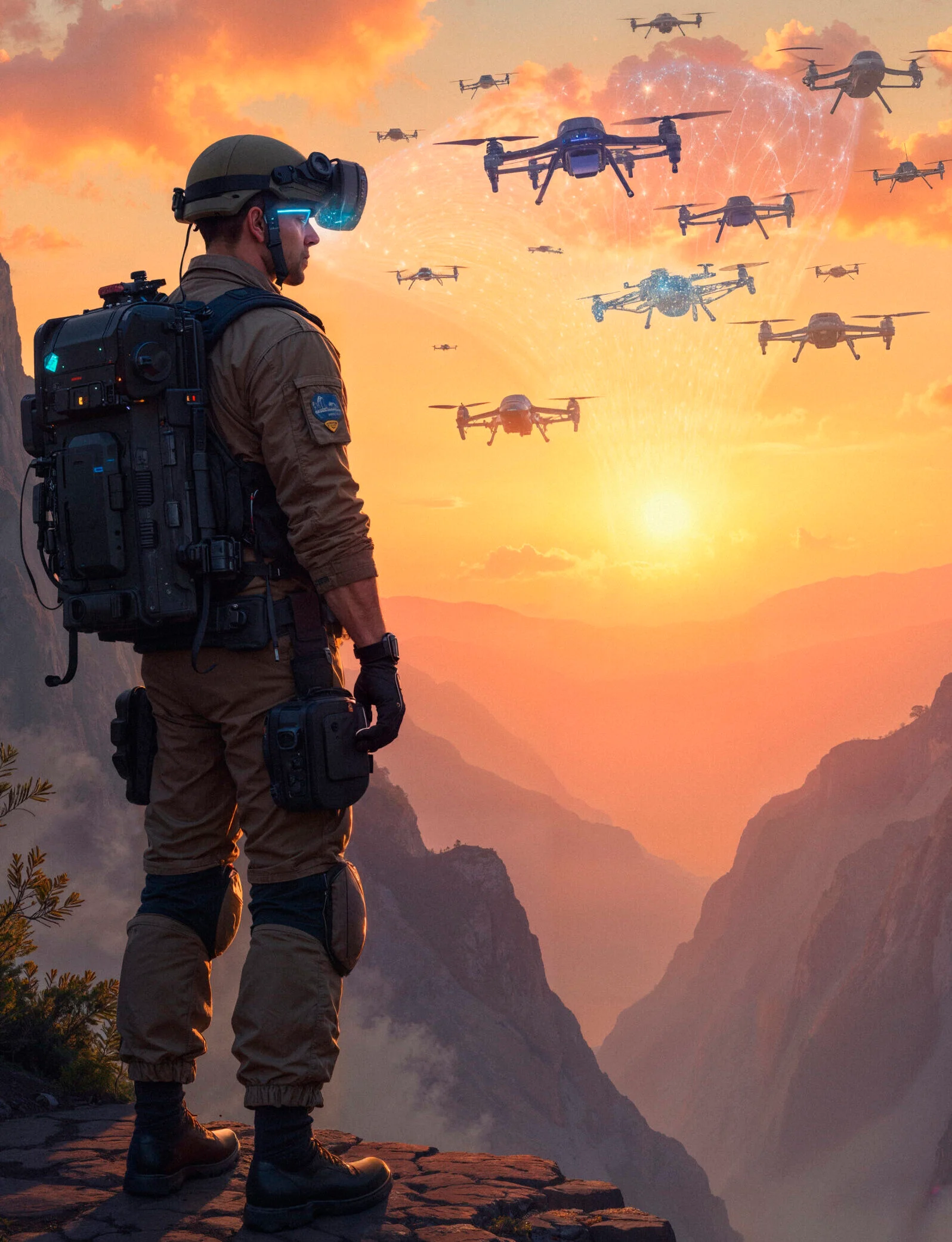
Autonomous and semi-autonomous unmanned aerial systems are becoming an increasingly important part of modern defense technology. Advances in artificial intelligence, sensing, communications and navigation are enabling multiple unmanned platforms to operate as coordinated systems rather than as isolated aircraft.
This evolution is creating new possibilities for surveillance, reconnaissance, situational awareness and operational support across complex environments.
From Individual Drones to Coordinated Systems
Traditional drone operations often depend on individual platforms controlled by human operators. Newer approaches explore how multiple unmanned systems can coordinate their activities while sharing information across a connected network.
A coordinated formation can allow different platforms to contribute information from different locations and perspectives.
Depending on the mission and system architecture, this may support:
- Wide-area observation
- Persistent surveillance
- Environmental monitoring
- Information gathering
- Multi-platform coordination
- Real-time situational awareness
The objective is to create a connected operational picture rather than relying on information from a single platform.
The Role of Artificial Intelligence
Artificial intelligence can play an important role in processing the large amount of information generated by modern unmanned systems.
AI-based technologies can assist with tasks such as:
- Processing sensor information
- Identifying patterns in collected data
- Classifying objects for human review
- Supporting navigation and route planning
- Detecting unusual activity
- Coordinating information between connected platforms
These capabilities can help reduce the amount of information that operators need to process manually.
However, autonomous technology does not remove the importance of human oversight. Human operators and mission planners remain essential for defining objectives, monitoring system performance and making decisions in situations requiring human judgment.
Connected Sensors and Situational Awareness
Modern unmanned systems can incorporate multiple sensors and communication technologies. When information from these systems is combined, it can contribute to a broader understanding of the operational environment.
Connected platforms can potentially provide information from different locations simultaneously, allowing operators to observe changes across a larger area.
This approach can be particularly valuable when the operating environment is dynamic and information must be processed from multiple sources.
Communication and System Integration
Effective coordination between autonomous platforms depends heavily on reliable communication and system integration.
A modern unmanned ecosystem may involve:
- Unmanned aerial platforms
- Ground-based systems
- Command-and-control infrastructure
- Sensor networks
- Data-processing systems
- Secure communication networks
Integrating these components can help create a more connected technology environment in which information can move between platforms and operational teams.
Human Oversight and Responsible Autonomy
Autonomous systems introduce important technical and operational considerations.
Reliable system design requires attention to areas such as:
- Communication resilience
- Security
- Navigation reliability
- Data integrity
- System redundancy
- Human oversight
- Operational safety
The level of autonomy should be designed according to the mission, operating environment and applicable policies and regulations.
Human oversight remains an important component of responsible deployment, particularly when systems operate in complex or uncertain environments.
The Future of Autonomous Defense Systems
The development of autonomous drone technology is moving toward increasingly connected and intelligent platforms.
Future systems may place greater emphasis on interoperability, AI-assisted data processing, distributed sensing and integration with wider command-and-control architectures.
Rather than viewing autonomous drones as individual platforms, defense organizations can increasingly consider them as components of a broader connected technology ecosystem.
Avatars Defense Perspective
At Avatars Defense, our focus is on exploring and developing advanced defense technologies that support modern operational requirements.
Autonomous platforms, artificial intelligence, simulation technologies, surveillance systems and connected digital infrastructure can contribute to the development of future-ready defense capabilities.
The continued evolution of these technologies will depend on responsible engineering, reliable system integration and a clear understanding of operational requirements.
Conclusion
Next-generation autonomous drone systems represent an important development in modern defense technology. The combination of AI, connected sensors, communications and coordinated unmanned platforms is creating new approaches to surveillance and situational awareness.
As these technologies continue to evolve, the focus will increasingly move toward secure integration, reliable autonomy, human oversight and interoperability across defense technology ecosystems.
The future of autonomous systems will not be defined by a single platform, but by how effectively multiple technologies can work together to provide useful and timely operational information.
Next-Gen Autonomous Drone Systems in Tactical Formations
Introduction
Autonomous and semi-autonomous unmanned aerial systems are becoming an increasingly important part of modern defense technology. Advances in artificial intelligence, sensing, communications and navigation are enabling multiple unmanned platforms to operate as coordinated systems rather than as isolated aircraft.
This evolution is creating new possibilities for surveillance, reconnaissance, situational awareness and operational support across complex environments.
From Individual Drones to Coordinated Systems
Traditional drone operations often depend on individual platforms controlled by human operators. Newer approaches explore how multiple unmanned systems can coordinate their activities while sharing information across a connected network.
A coordinated formation can allow different platforms to contribute information from different locations and perspectives.
Depending on the mission and system architecture, this may support:
- Wide-area observation
- Persistent surveillance
- Environmental monitoring
- Information gathering
- Multi-platform coordination
- Real-time situational awareness
The objective is to create a connected operational picture rather than relying on information from a single platform.
The Role of Artificial Intelligence
Artificial intelligence can play an important role in processing the large amount of information generated by modern unmanned systems.
AI-based technologies can assist with tasks such as:
- Processing sensor information
- Identifying patterns in collected data
- Classifying objects for human review
- Supporting navigation and route planning
- Detecting unusual activity
- Coordinating information between connected platforms
These capabilities can help reduce the amount of information that operators need to process manually.
However, autonomous technology does not remove the importance of human oversight. Human operators and mission planners remain essential for defining objectives, monitoring system performance and making decisions in situations requiring human judgment.
Connected Sensors and Situational Awareness
Modern unmanned systems can incorporate multiple sensors and communication technologies. When information from these systems is combined, it can contribute to a broader understanding of the operational environment.
Connected platforms can potentially provide information from different locations simultaneously, allowing operators to observe changes across a larger area.
This approach can be particularly valuable when the operating environment is dynamic and information must be processed from multiple sources.
Communication and System Integration
Effective coordination between autonomous platforms depends heavily on reliable communication and system integration.
A modern unmanned ecosystem may involve:
- Unmanned aerial platforms
- Ground-based systems
- Command-and-control infrastructure
- Sensor networks
- Data-processing systems
- Secure communication networks
Integrating these components can help create a more connected technology environment in which information can move between platforms and operational teams.
Human Oversight and Responsible Autonomy
Autonomous systems introduce important technical and operational considerations.
Reliable system design requires attention to areas such as:
- Communication resilience
- Security
- Navigation reliability
- Data integrity
- System redundancy
- Human oversight
- Operational safety
The level of autonomy should be designed according to the mission, operating environment and applicable policies and regulations.
Human oversight remains an important component of responsible deployment, particularly when systems operate in complex or uncertain environments.
The Future of Autonomous Defense Systems
The development of autonomous drone technology is moving toward increasingly connected and intelligent platforms.
Future systems may place greater emphasis on interoperability, AI-assisted data processing, distributed sensing and integration with wider command-and-control architectures.
Rather than viewing autonomous drones as individual platforms, defense organizations can increasingly consider them as components of a broader connected technology ecosystem.
Avatars Defense Perspective
At Avatars Defense, our focus is on exploring and developing advanced defense technologies that support modern operational requirements.
Autonomous platforms, artificial intelligence, simulation technologies, surveillance systems and connected digital infrastructure can contribute to the development of future-ready defense capabilities.
The continued evolution of these technologies will depend on responsible engineering, reliable system integration and a clear understanding of operational requirements.
Conclusion
Next-generation autonomous drone systems represent an important development in modern defense technology. The combination of AI, connected sensors, communications and coordinated unmanned platforms is creating new approaches to surveillance and situational awareness.
As these technologies continue to evolve, the focus will increasingly move toward secure integration, reliable autonomy, human oversight and interoperability across defense technology ecosystems.
The future of autonomous systems will not be defined by a single platform, but by how effectively multiple technologies can work together to provide useful and timely operational information.