
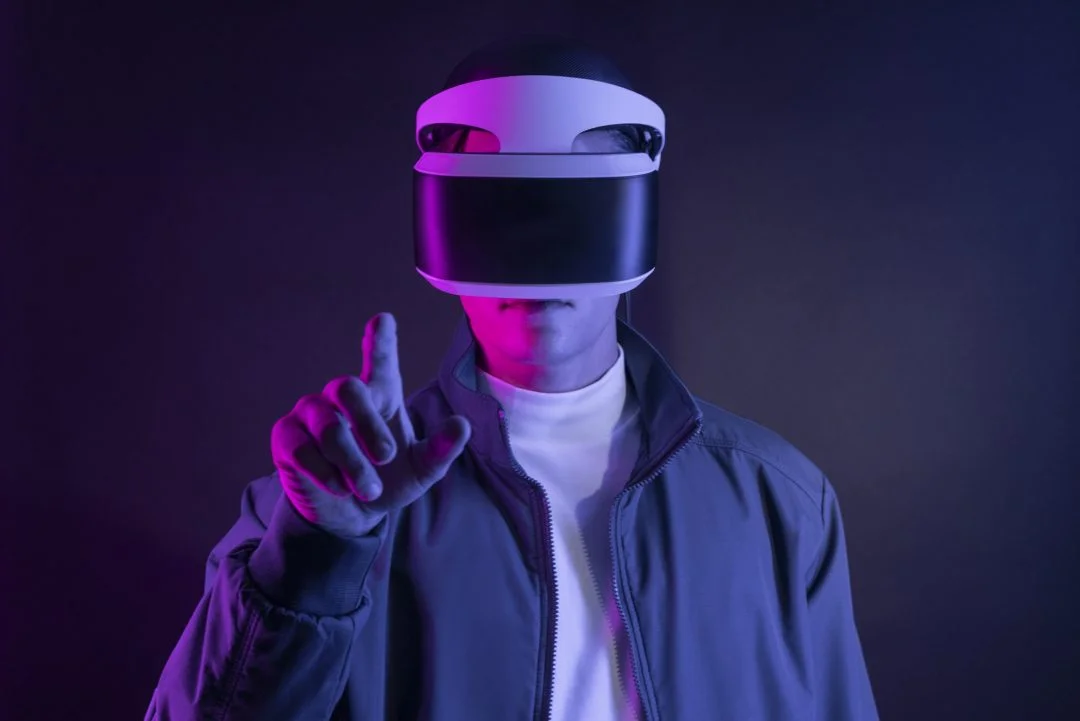
Modern defence training is moving beyond conventional classroom instruction and basic simulation environments. Extended Reality (XR), including Virtual Reality (VR) and Augmented Reality (AR), is creating new possibilities for immersive training, scenario development and operational preparedness.
AVatara Defence is developing integrated XR-based simulation environments designed to support realistic and repeatable training experiences for defence and security organisations.
What Is an XR Combat Simulator?
An XR combat simulator combines immersive digital environments with interactive training scenarios. Personnel can experience simulated operational situations without requiring the physical deployment of complete training infrastructure.
Depending on the training requirement, an XR environment can incorporate:
- Virtual reality training environments
- Augmented reality interfaces
- Interactive mission scenarios
- Digital terrain and operational environments
- Equipment and vehicle simulations
- Multi-user training environments
- Scenario-based decision-making exercises
These technologies can help organisations create controlled environments where different operational situations can be studied and practised.
Building More Immersive Training Environments
Traditional training exercises can require significant infrastructure, personnel and preparation. Digital simulation can complement these activities by providing configurable environments that can be adapted to different training objectives.
An XR-based framework can allow training teams to modify scenarios, environments and operational conditions while maintaining a controlled simulation environment.
This creates opportunities for repeated exercises and structured evaluation.
Scenario-Based Training
One of the important applications of immersive simulation is scenario-based training.
A training environment can reproduce different operational conditions, allowing personnel to practise responses to situations such as:
- Tactical coordination
- Mission planning
- Situational awareness
- Navigation
- Equipment operation
- Emergency response
- Team communication
The objective is not simply to reproduce a visual environment, but to create an interactive training experience around specific operational requirements.
Technology Supporting Defence Readiness
XR technologies can work alongside other defence technology platforms to create broader digital training ecosystems.
These may include simulation software, sensor systems, digital maps, artificial intelligence-enabled systems and command-and-control interfaces.
When integrated appropriately, these technologies can provide training teams with a more flexible environment for preparing personnel for complex operational scenarios.
A Scalable Approach to Simulation
A modern simulation framework should be capable of adapting as training requirements evolve.
AVatara Defence focuses on developing technology solutions that can support different environments, scenarios and operational requirements while providing a scalable foundation for future capabilities.
The integration of XR with defence training represents an important area of technological development, particularly as organisations look for more flexible and data-driven approaches to preparedness.
Looking Ahead
The future of defence training is increasingly connected to immersive technologies, digital environments and intelligent simulation systems.
XR-based training can provide a complementary environment for developing skills, testing scenarios and improving familiarity with complex operational situations.
AVatara Defence continues to explore advanced simulation and immersive technology solutions designed around the evolving requirements of modern defence organisations.
AVatara Defence — Engineering technology for next-generation defence readin