
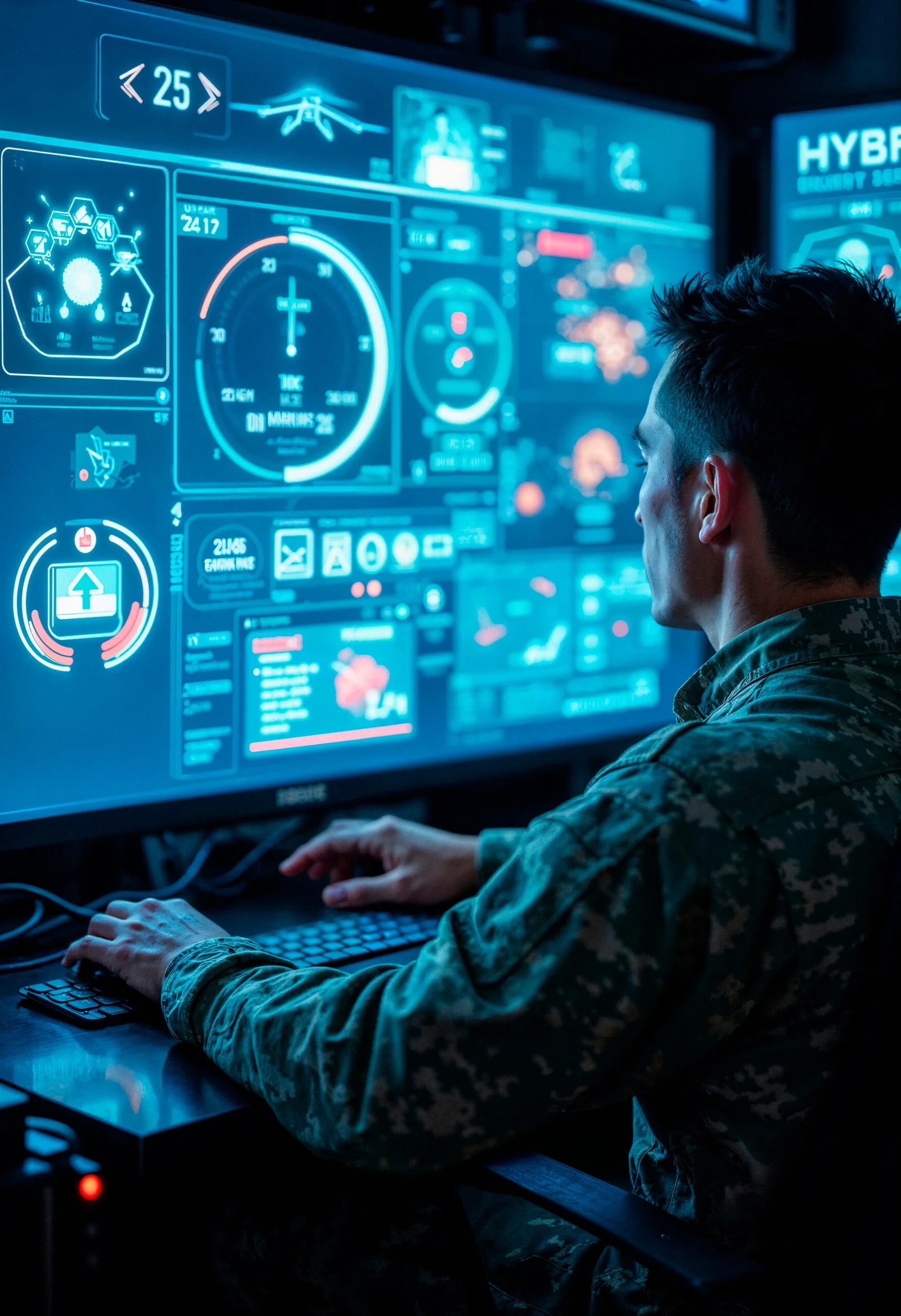
Modern defence operations increasingly depend on the ability to collect, process and interpret large volumes of information in real time. From surveillance systems and sensors to communication networks and unmanned platforms, defence organisations operate across increasingly complex information environments.
Artificial Intelligence (AI) is emerging as an important technology for helping process this information and support faster situational understanding.
What Is Situational Awareness?
Situational awareness refers to the ability to understand what is happening within an operational environment, identify relevant developments and assess how those developments may affect a mission.
Traditional systems may require personnel to monitor multiple information sources simultaneously. AI-enabled systems can assist by processing large amounts of structured and unstructured data and presenting relevant information through digital interfaces.
How AI Can Support Defence Operations
AI technologies can be applied across several areas of defence information management, including:
- Sensor and surveillance data analysis
- Object and activity detection
- Pattern recognition
- Real-time information processing
- Geographic and terrain analysis
- Automated data classification
- Intelligence-support workflows
- Command-and-control information systems
These applications can help transform large data streams into information that is easier for authorised personnel to review and interpret.
Integrating Multiple Data Sources
Modern operational environments can generate information from different platforms and systems.
These may include:
- Radar systems
- Electro-optical and infrared sensors
- Unmanned aerial systems
- Ground-based sensors
- Communication networks
- Satellite and geographic information
- Digital command systems
An AI-enabled situational-awareness platform can be designed to bring information from multiple sources into a unified operational view.
This can help reduce the need to manually review disconnected information sources.
From Data to Operational Understanding
Collecting data is only one part of the challenge.
The larger challenge is understanding what the data means in an operational context.
AI-based analytics can identify patterns, highlight unusual activity and organise information according to predefined operational requirements. Human operators can then review the information and make decisions based on their training, procedures and available intelligence.
The role of AI in this context is to support information processing rather than replace human command and decision-making.
Supporting Faster Information Workflows
In time-sensitive environments, information needs to move efficiently between sensors, analysis systems and authorised decision-makers.
AI-enabled platforms can help automate selected parts of this workflow.
For example, incoming information can be processed, classified and displayed according to predefined parameters. This can allow personnel to focus more attention on information that requires human review.
AI and Unmanned Systems
The combination of AI and unmanned systems is another important area of development.
Unmanned aerial and ground platforms can generate significant amounts of visual and sensor data. AI-based processing can assist with analysing this information and identifying relevant observations.
When integrated with appropriate command-and-control infrastructure, these capabilities can contribute to a broader digital operational environment.
Building Responsible AI Systems
Defence applications of AI require careful consideration of reliability, cybersecurity, human oversight and system integration.
AI systems should operate within clearly defined parameters and appropriate governance frameworks. Human oversight remains important, particularly for mission-critical applications.
Reliable data, secure infrastructure and properly trained personnel are also essential components of an effective AI-enabled defence ecosystem.
The Future of Defence Situational Awareness
As defence organisations continue to adopt digital technologies, situational awareness is becoming increasingly connected to AI, sensors, simulation platforms, unmanned systems and secure communication infrastructure.
The integration of these technologies can create more connected operational environments where information can be collected, processed and presented through a unified digital framework.
AVatara Defence continues to explore technologies that support advanced situational awareness, intelligent information processing and next-generation defence operations.
AVatara Defence — Building intelligent technology for the evolving defence ecosystem.